Explore the infrastructure behind real-time casino broadcasts: optical card recognition sensors, low-latency video streaming, dealer management, and deck integrity.
How Live Casino Works: Studio Technology, OCR, and Fair Streaming
A live table looks immediate on a mobile screen, yet several distinct systems must agree before any round can be settled. Cameras capture the physical action on the floor while recognition tools translate cards or wheel results into digital data, which allows the central host platform to record each accepted wager directly in your personal ledger. Network delay can separate what a player sees on their phone from what has already concluded inside the broadcast studio. Learning how live casino works provides adult players with a clear sequence of these technical components. It also shows where an Australian viewer should look for table rules, round history, and formal procedures for handling technical errors. Understanding the underlying technology makes it easier to evaluate operator statements and respond calmly if a video feed stutters.
When examining a live studio lobby, reviewing the options at CrownAU77 casino shows how table categories separate traditional card games from automated wheels, because every broadcast relies on precise synchronisation between the dealer floor, optical sensors, and server databases. If you plan to wager, knowing how live casino works behind the screen helps you distinguish between normal processing delay, a frozen display, and a rejected betting instruction.
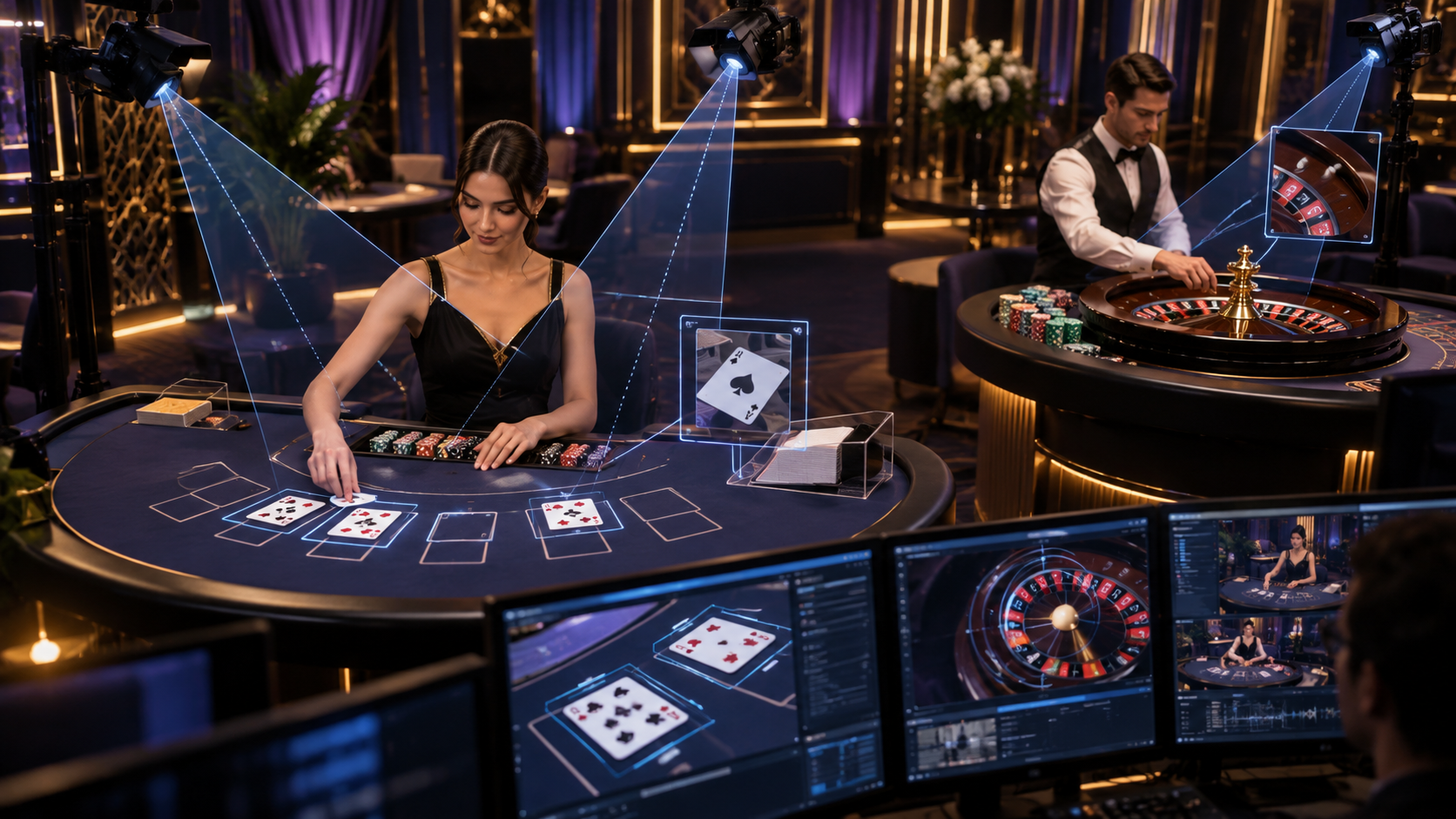
How Live Casino Works: Connecting the Physical Table to a Digital Interface
Live casino games merge a physical studio table with a website or mobile interface. A human host deals cards, spins a roulette wheel, or conducts another game directly in front of specialised broadcast cameras. Players submit their wagers through an interactive on-screen betting overlay before the round timer expires and the betting window closes. Once the physical round concludes, the outcome at the felt is logged and reflected in each participating player’s account balance.
This sequence appears straightforward on a phone display, but it depends on multiple operational systems operating concurrently:
- High-definition video capture broadcasting the studio floor in real time.
- Betting window timing controls that enforce strict cut-off moments for incoming stakes.
- Game-state tracking engines that interpret dealer actions and physical game pieces.
- Central transaction databases that record wagers, balance deductions, and winning payouts.
An operator offering live casino Australia options must clearly display minimum limits, maximum caps, and specific game variations before anyone commits funds to a seat, while the live dealer streaming provides an authentic view of the ongoing round and your account history provides the definitive audit trail required if your mobile connection suddenly drops.
Inside the Broadcast Studio: Camera Angles, Lighting, and Dealer Controls
Inside a modern broadcast environment, a studio typically deploys several cameras positioned at varied heights and distances to cover the host, table surface, and all relevant equipment. Powerful studio lighting helps the cameras capture clear, readable imagery without creating harsh shadows that could obscure physical movements. The presenter adheres to strict operational routines for opening stakes, calling the end of wagers, running the hand or spin, and declaring the final outcome.
Supervisors continuously monitor active tables across the studio floor and can step in whenever a procedural error or physical snag arises. These operational details carry practical weight because table games involve genuine financial stakes rather than simulated graphics, which means every accepted wager must connect to a clearly numbered round and a verifiable outcome.
Table setups vary significantly between providers and game variants. Multiple camera angles give viewers varied perspectives during play:
- Close-up camera views allow players to inspect card faces or the resting position of a roulette ball.
- Wide-angle cameras capture the dealer’s upper body and hand movements to preserve context.
- Dynamic switching alternates between wide and close perspectives as the game transitions from betting to resolution.
Even dynamic live dealer streaming cannot show every corner of the studio or the handling of unused equipment off camera, because visual broadcast feeds do not replace clear operational rules, deck handling protocols, or dispute policies that reputable tables ensure remain easy to read directly from the interface.
How Bets Travel from Your Screen to the Central System
When you select a digital chip value and tap a betting spot, the interface transmits an instruction across the network to the gaming server. An on-screen countdown timer informs you how many seconds remain before the round closes. Once that countdown finishes, late instructions are rejected by the server, even if a lagging phone screen still shows the physical host waiting at the felt.
The central platform logs every accepted stake alongside a unique round identifier, timestamp, and the settled balance. Because different live tables enforce distinct betting timeframes, side bet payouts, and minimum stakes, you should always open the limits panel before placing funds, as moving between two blackjack tables from the same provider does not guarantee identical side wagers or betting durations.
If your screen freezes during active play, keep the following practical guidelines in mind:
- A frozen stream does not mean the round stopped in the studio; the dealer continues according to established procedures.
- Avoid tapping the betting spot again repeatedly, as you risk submitting unintended stakes for upcoming rounds once the connection recovers.
- Wait for the account history or transaction ledger to refresh to determine whether your original stake was accepted and how the round resolved.
- If the balance or result appears inconsistent, take note of the exact time and round identification number before contacting support.
Having that precise identifier enables the support team to examine the server logs rather than relying on guesswork, which ensures that any disputed balance adjustment is investigated against the recorded transaction history.
How Live Casino Works with Optical Character Recognition and Table Sensors
A vital component in understanding how live casino works is the translation layer that converts physical objects into software commands. Optical character recognition, commonly abbreviated as OCR, reads physical visual details and transforms them into digital information. In card games, high-speed cameras or embedded scanners capture card ranks and suits as the dealer pulls them from the shoe and slides them over reading zones. In roulette, specialised optical sensors and overhead cameras identify the exact pocket where the ball settles.
This card recognition infrastructure feeds real-time data straight into the betting interface, enabling the server to calculate winning positions, apply paytables, and update player balances automatically. However, card recognition is a practical measurement tool rather than a guarantee of overall game fairness, because systems can experience misreads, camera misalignments, or equipment wear that require studio providers to maintain documented operational protocols to inspect physical hardware and void or manually recalculate affected rounds.
Players sometimes notice that a ball settles or a card turns over a split second before the on-screen digital banner updates, or conversely, that the digital readout updates before the video catches up. The video stream, the card recognition scanner, and the banking ledger travel across separate data pathways, which means slight timing differences reflect standard network routing and device buffering while the transaction record in your account history remains the authoritative source of truth.
Latency, Bandwidth, and Mobile Stream Stability
Latency represents the duration of time required for an event in the studio to reach your device screen, as well as the time taken for your betting tap to reach the operator’s server. This delay fluctuates based on mobile network coverage, server traffic, home Wi-Fi stability, and device processing capability.
High-resolution video feeds demand substantial bandwidth, which is why many modern mobile interfaces feature adaptive bitrate streaming that automatically lowers visual resolution during signal drops to keep the video moving smoothly without freezing. Maintaining a stable local connection is essential, particularly on tables with tight twenty-second betting windows.
Players must learn to separate a delayed video feed from an unconfirmed wager. If your balance does not deduct and the interface does not present an acceptance confirmation before the countdown reaches zero, your bet was not registered for that round, because a clear video feed makes viewing comfortable but cannot alter the formal settlement rules stored on the server.
Cards, Wheels, and the House Edge Across Classic Formats
Traditional table formats follow rigid mathematical rules that operate independently of the video broadcast. While the presence of a real human dealer creates a social atmosphere, the host does not influence mathematical outcomes or improve your odds:
| Game Type | Studio Equipment Used | Core Operational Procedures |
|---|---|---|
| Blackjack | Manual or automated multi-deck shoes, scanner plates | Strict dealer hit or stand rules, fixed doubling conditions, and split limitations |
| Baccarat | Dealing shoe, optical card readers, digital result displays | Predetermined drawing tableau for Player and Banker hands with fixed commissions |
| Roulette | Precision physical wheel, launch track, optical pocket sensors | Numbered pocket layout, ball release routines, and automated winning number detection |
Every table variant carries a defined mathematical advantage for the operator. Reviewing the house edge across different rule sets reveals that minor variations, such as whether a blackjack dealer hits or stands on soft 17, alter your long-term return far more than any dealer interaction, while the physical camera view makes every card draw visible without modifying mathematical probabilities.
The table host manages cards, prompts players to place wagers, and answers basic text questions sent through the live chat window. However, chat hosts do not settle bets, manage payouts, or adjust account balances. If you believe a payout was calculated incorrectly, public chat is not the place to seek binding solutions, so you should use official customer support channels and provide the round identifier from your history log.
Evaluating Technical Integrity, Audits, and Regulatory Boundaries
Players reviewing live dealer options often encounter statements regarding software certifications and game testing. When assessing these claims, consider what specific components were evaluated, the testing agency involved, and the date of the review. A certificate issued for a random number generator on virtual games does not automatically apply to physical studio equipment, physical card shoes, or optical tracking cameras.
Legitimate studio providers publish detailed rules explaining how technical incidents are resolved:
- Procedures for dealing with misdeals, such as cards drawn out of sequence or exposed prematurely.
- Specific rules governing equipment faults, camera freezes, and disconnected video streams.
- Conditions under which a round is declared void and stakes are returned to player balances.
- Methods for players to review historical hand records and lodge formal transaction disputes.
Checking the documentation for regular fairness checks helps verify how an operator inspects equipment and resolves disputed rounds, because visual polish, clean studio backgrounds, and high-definition streams do not constitute independent regulatory certification. Furthermore, Australian players must keep in mind that the mere presence of an English-language stream accessible on an Australian IP address does not imply that the interactive service holds an Australian operating licence.
Managing Bankroll and Time at Fast-Paced Tables
Live studio games move at an unrelenting, rhythmic pace. Dealers are trained to keep rounds moving efficiently, and countdown timers reset immediately after winnings are distributed. Before opening any live table, establish strict limits on both your financial expenditure and your total screen time.
Consider these practical habits when participating in live rounds:
- Review the minimum stake per hand or spin to ensure it aligns with your total session bankroll.
- Treat optional side bets with caution, as they carry distinct mathematical advantages and accelerate expenditure.
- Recognise that past streaks on roulette boards or baccarat scorecards do not influence upcoming outcomes.
- Take planned breaks away from your screen to reassess your budget rather than placing automatic bets every round.
Live tables are intended strictly as paid entertainment with real financial costs, never as an avenue to generate income or recover past losses. If you find it challenging to walk away or feel compelled to chase losses, terminate the session immediately and make use of account limit tools or independent Australian support services, because understanding how live casino works provides technical clarity, but sound bankroll control remains essential whenever real funds are at stake. Players visiting CrownAU77 can use this technical overview as a practical checklist when examining live tables, checking rules, and inspecting stream settings.